
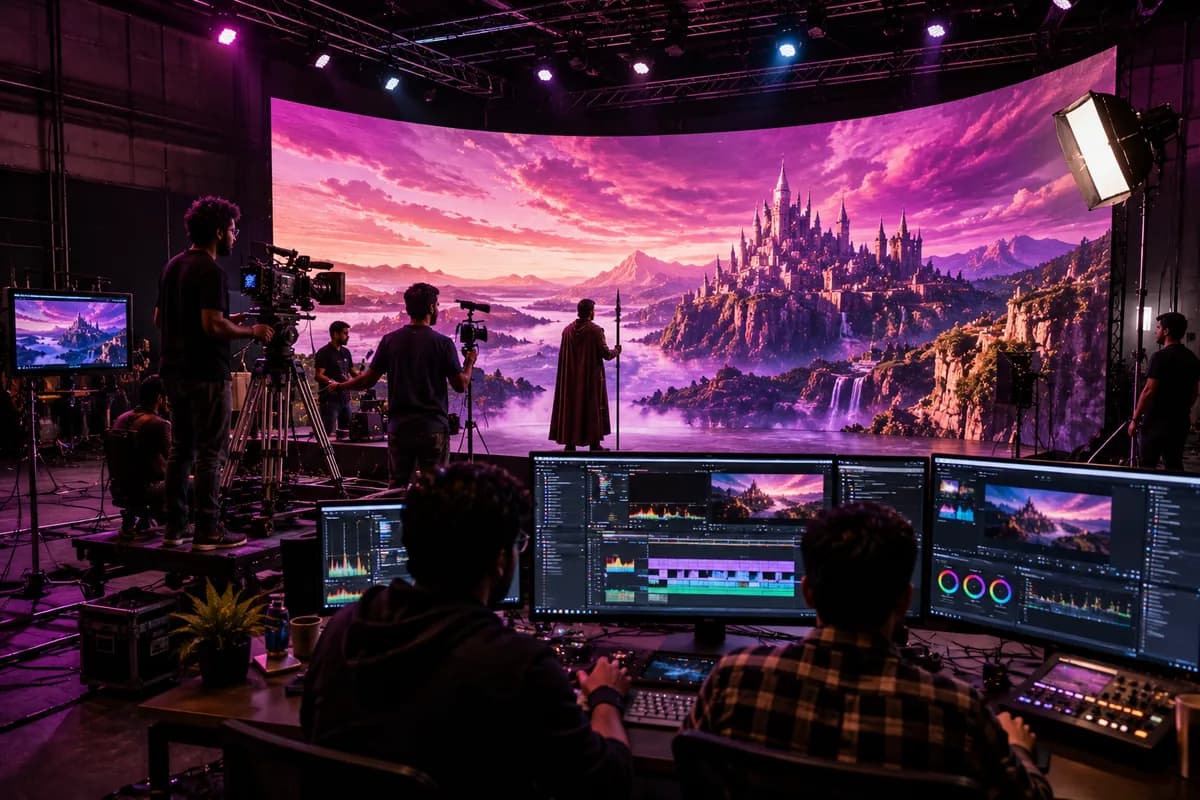
AI in Media & Entertainment: Speed Without Losing the Rights
Media has been sold more AI than any other sector, and has used far less of it than the coverage suggests. The gap is not about what the tools can do. Most of this work touches content that has an owner, and getting that wrong costs more than any speed it buys.
15 min read
Indian media runs at a pace few markets match. Content ships in a dozen languages, release windows run to days, and in live sport a highlight is worth little an hour after the match. Almost all of it comes down to one thing: turnaround.
That makes the sector a good fit for automation. A localisation job that takes three weeks could take three days, and that changes what is worth doing at all. The same pace makes the limits bite harder. The raw material is content that has an owner, performers have contracts, and licensors have approval clauses.
The eight below are sorted by speed to a result, with the rights position given for each. That is what tells you if a use case is open to you. Being possible is not the same as being allowed.
Content Localisation & Dubbing
The biggest commercial prize in Indian media. It also needs the most care on contracts.
A title in one language reaches one audience. The same title in eight reaches a much larger market. Old-style dubbing is slow and costly, so it happens only for titles a buyer is sure of. Content that would have worked in a second language never gets a chance.
AI-assisted localisation changes that maths: translation and subtitles, then synthetic voice where rights allow. What it does not remove is the human pass. Idiom, humour, cultural reference and lip-sync all need a native speaker, and a bad dub damages the title rather than widening its reach.
Rights are the gate here. Synthetic voice uses a performer's likeness, so it needs consent in writing. Performer agreements signed years ago do not cover it. Treat that as question one, not as a clearance step at the end.
Rights first
- Performer consent for synthetic voice
- Does your licence allow derivative works?
- Native-speaker review is not optional
- Idiom, where machine translation fails
AI Highlights & Auto-Summarisation
A highlight package while your viewers are still watching, not the next morning.
In live sport and news, a highlight has a short life. Cut it within the hour and it pulls traffic; cut it next morning and a rival has run it first.
The model finds key moments in the video, the audio and the live data feed, and gives a rough cut in minutes. An editor then shapes it. That split is the right one: the model finds the moments, and the editor knows which ones tell the story and in what order.
On long-form, the same method writes chapter markers and summaries. That makes old catalogue titles easier to find, and nobody has time to index them by hand.
Works best with
- Live data feed plus video
- Crowd noise, a strong signal
- An editor does the final cut
- Your archive of past clip choices
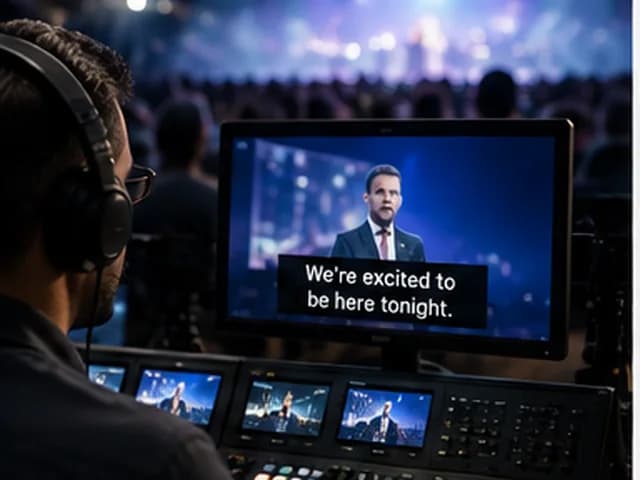
Real-Time Live Captioning
Live captions across languages. In many settings this is now a duty, not a bonus.
Live captions are an access requirement in a growing number of settings, and they also help people find your content. Doing it by hand across many channels and languages is not workable at Indian broadcast scale.
Speech recognition does well on clean audio, and broadcast audio is not clean. You get speakers talking over each other, crowd noise, and code-switching mid-sentence between English and a regional language. That is normal here, and most systems handle it badly.
So test it on an hour of your own output, not on a benchmark. And build a way to fix errors while you are still live.
Test on your real content
- Code-switching mid-sentence, normal here
- Speakers talking over each other
- Player, place and programme names
- A way to fix live errors
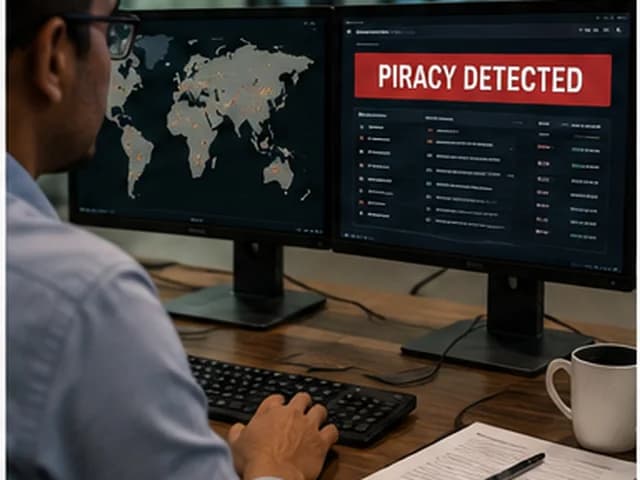
Piracy Detection & Prevention
Find pirated copies with fingerprinting that survives re-encoding and cropping.
Piracy here is fast and wide, and a new title is copied within hours of release. No team can watch the whole surface by hand. Simple file matching fails at once, since pirated copies are re-encoded, cropped, watermarked and screen-recorded.
Perceptual fingerprinting reads content by how it looks and sounds, not by the file itself, so it survives all of that. Watching across platforms and channels finds the copies, and the system then drafts takedown notices with the evidence attached.
It will not stop piracy. It shortens the window, and it automates takedowns that would not happen at all by hand. On a new release, that is real money.
Realistic expectations
- Fingerprinting survives re-encoding; hashing does not
- Most damage in the first 48 hours
- Takedown volume needs automation too
- This shortens the window, nothing more
Personalised Content Recommendation
Match viewers to catalogue. The bigger your library, the more this matters.
For a streaming service, recommendation is retention. A viewer who finds nothing to watch in two minutes closes the app. Do that a few times and they stop coming back.
The Indian twist is shared accounts. One profile is often a whole household with very different tastes, and treating it as one person gives picks that suit no one. How you handle that matters more than which model you pick. Session-level inference is one route; nudging people onto their own profile is another.
Local realities
- Shared accounts are the norm
- Language beats genre as a signal
- Cold-start needs a content-based fallback
- Regional titles are where value sits
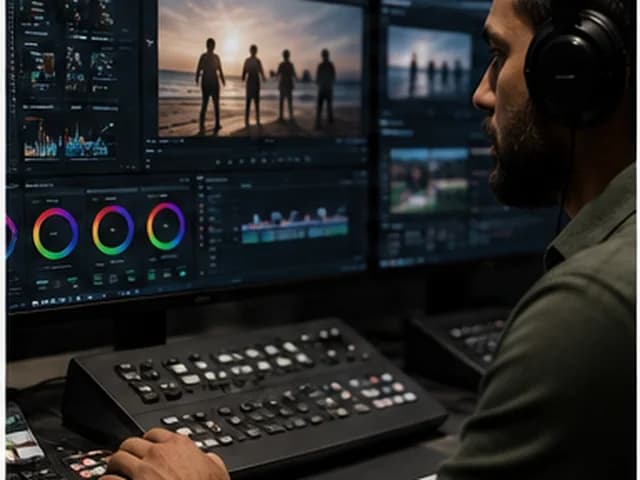
Automated Video Editing
Rough cuts, format variants and social clips from master footage.
One asset now has to exist in many forms: wide and tall, long and short, with subtitles and without, cut for four platforms that each have their own house rules. That work is skilled, and it is done again and again.
Automation takes the mechanical part. It reframes to vertical while keeping the subject in shot, cuts to length at sensible points, and builds the platform variants. An editor then checks and adjusts. This is real time returned on work nobody enjoys.
Good for
- Format and aspect variants
- Social clips an editor then picks
- Rough assembly, never final cut
- Subject tracking often needs a correction
Audience Sentiment Analysis
Track response on social while the title is still in its release window.
Audience response used to arrive as ratings, days later. Now it arrives on social within the hour, in many languages, at a volume no one can read.
Sorting that at volume shows how a title is landing, which parts people talk about, and how that shifts by region and language. A release window is days, not weeks, and knowing on day two what audiences respond to changes what you promote.
Notes
- Mixed and transliterated text is normal
- Split organic response from paid chatter
- Regional splits are the useful finding
- Sarcasm is hard; scores are rough
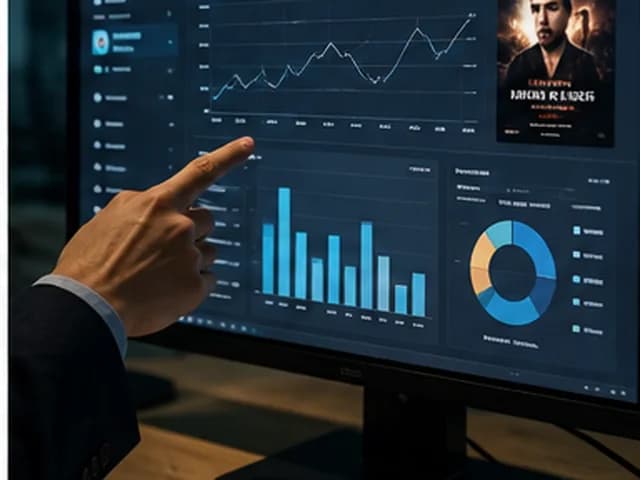
Predictive Content Performance
An estimate of how a title will do before you commission it. Treat it with care.
Commissioning runs on judgement, comparables and contacts. A model can add a fourth input by learning what has done well before, given genre, cast, language, release window and rival titles.
We would frame this with care. Content performance is hard to predict, and the industry's own hit rate shows that. Anyone selling a reliable forecast is overselling it. What a model does well is flag a proposal whose assumptions do not match the record. In a commissioning meeting that is a useful challenge, not a decision.
Keep expectations honest
- One input, never a green light
- New formats have no history
- Best used to test assumptions
- Beware only commissioning what exists
Sequencing
Where to Start
Sorted by speed to a result you can use, with the gate on each one named.
| Use case | Time to result | Gating constraint |
|---|---|---|
| Live Captioning | 6–8 weeks | Accuracy on your audio, code-switching included |
| Automated Video Editing | 6–10 weeks | Editor acceptance of rough cuts |
| Highlights & Summarisation | 8–12 weeks | Live data feed beside the video |
| Piracy Detection | 8–12 weeks | Takedown capacity, not detection |
| Localisation & Dubbing | 3–5 months | Performer consent and derivative-works rights |
| Recommendation | 3–4 months | Viewing history and shared-account handling |
Where We Specialise
Agents for the Production Pipeline
Media operations are mostly coordination. Chasing a clearance, tracking which language versions are ready, assembling what each platform wants, watching what audiences are saying. It is dull work, it never stops, and it stands between a finished asset and a release.
The four below handle that coordination. Creative calls stay with people: what to cut, what to commission, what to say in public. The tracking and the chasing do not need a person.
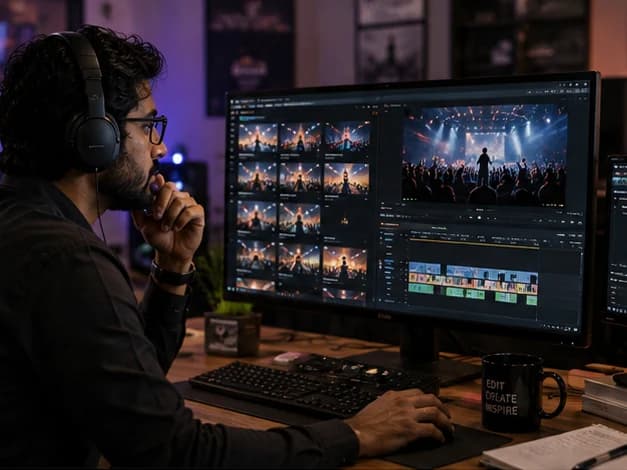
Content Packaging Agent
Each platform variant built and checked against that platform's spec.
One asset ships to many platforms, and each has its own rules on aspect ratio, length, bitrate, thumbnail size, title length and metadata fields. Get one wrong and it is rejected days later, often close to a release date.
The agent builds the variants from an approved master and checks each one against that platform's current spec. It writes the metadata in the shape required, and flags whatever it cannot settle on its own. The operations team gets a package that will not fail on a technicality.
A person signs off the delivery. The reformatting and the spec checks do not need one.
Handles
- Aspect, duration and bitrate variants
- Thumbnail and artwork sizes
- Metadata fields and length limits
- Checks run before delivery, not after
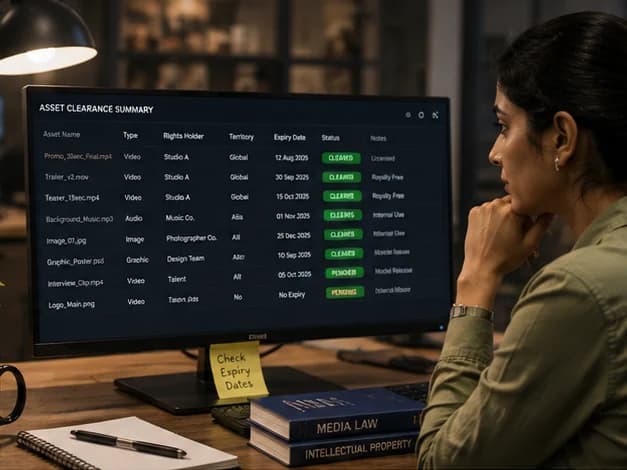
Rights & Clearance Agent
Clearance status for each asset, kept current, not chased in the last week before release.
Rights and clearance data sits in contracts, in email, and in a spreadsheet one person keeps. So 'can we release this in this territory on this date' means asking three people and hoping the spreadsheet is current.
The agent keeps that position up to date. It pulls terms out of agreements, tracks which clearances are held and which are pending, and flags territory and window limits. It warns you before a licence expires rather than after, and chases open clearances against the release calendar.
It does not rule on rights. It shows the position and the gaps, so legal can make that call with the facts to hand.
Tracks
- Territory and window limits per title
- Music and archive clearances
- Performer consents, synthetic voice included
- Licence expiry, warned in advance
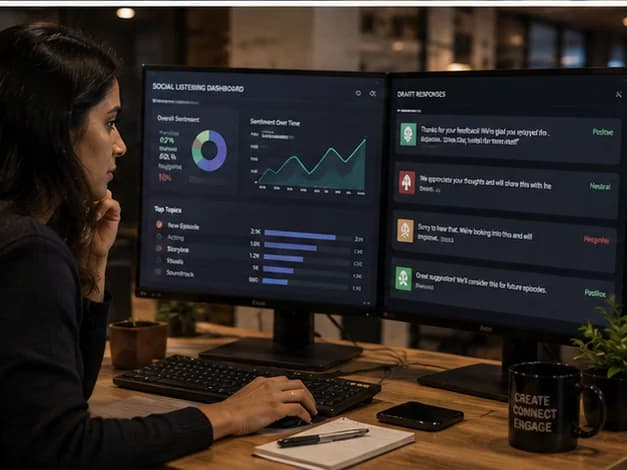
Audience Response Agent
Audience conversation watched and answered. Anything sensitive goes to a person fast.
In a release window, audience talk runs at a volume no team can read, across languages and platforms. And it peaks in the first hours, when your response matters most.
The agent watches, sorts and drafts replies to routine questions: where to watch, release dates, what is available. It then surfaces what the comms team needs to see — a complaint building, a false claim spreading, a real shift in mood by region.
The escalation rules are strict. Anything that touches a legal matter, a named performer, a public argument, or a co-ordinated campaign goes to a person at once. Public comment during a release is not a job for an agent.
Escalate immediately
- Legal matters and named performers
- Co-ordinated campaigns need a strategy
- False claims, which spread fast
- No sensitive post without a human
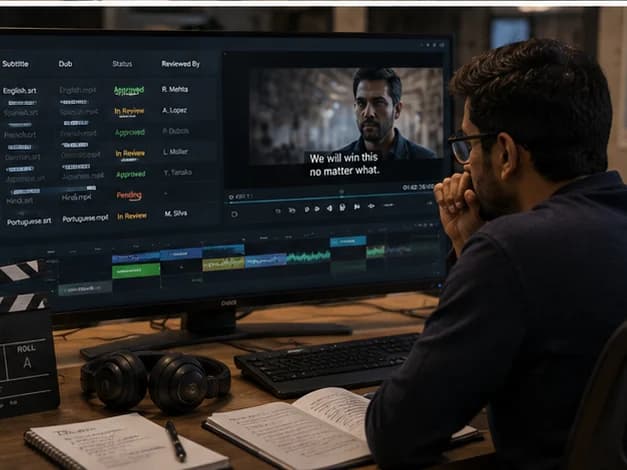
Localisation Workflow Agent
Each language version tracked through translation, review, mix and QC.
A title in eight languages is eight parallel workflows. Each has translation, review, recording, mixing and QC, its own vendor and its own status. Today that is a spreadsheet, updated each week by whoever remembers.
The agent tracks each version through each stage and chases vendors on deliverables. It flags which languages will miss the release date, while there is still time to act. It sends finished versions on for QC, and shows the critical path rather than the whole grid.
Native-speaker review stays human. But knowing that Tamil is four days behind, and Bengali has not started, is not work for a person with a spreadsheet.
Surfaces
- Languages at risk, flagged early
- Overdue vendor deliverables, chased
- QC pass or fail per version
- The critical path, not a grid
Rollout
Introducing This Without Upsetting the Floor
Media teams have been shown a lot of AI that was going to replace them. How you bring this in will settle whether it gets used.
- 1
Start where nobody wants the work
Format variants, spec checks, clearance tracking. Nobody defends these tasks, and a win here buys you trust for work nearer the creative side.
- 2
Editors keep final cut, visibly
The model proposes; a person decides. That has to be true in the tool itself, not just said in a meeting. A tool that publishes without sign-off will be resisted, and it should be.
- 3
Settle rights before the pilot
Find out what your licences and performer agreements really allow, and do it before you build. Finding a consent gap after a workflow is live is costly, and you can avoid it.
- 4
Measure turnaround, not headcount
The case here is speed: more titles localised, highlights out within the hour, more of the catalogue made easy to find. Put it to staff as a headcount cut and you get a worse business case, and certain resistance.
Being Straight About It
Worth doing if
- Broadcasters and streamers with large catalogues
- Localisation limited by cost, not demand
- Live and news, where turnaround pays
- Rights holders hit by launch-week piracy
Probably not, if
- Licences that still bar derivative works
- Synthetic voice without performer consent
- Teams wanting the model to decide
- Small catalogues one person already knows
FAQ
Questions Broadcasters and Studios Ask Us
Almost certainly not, and this is the first thing to check rather than the last. Synthetic voice copies a performer's likeness, and that needs consent in writing. Agreements signed years ago, before any of this was possible, do not cover it. Some studios are reopening those contracts; others limit synthetic voice to content they own outright. This is a contract question first and a technical one second, and we will not build around it.
Better than most people expect on plain dialogue, and still visibly off on idiom, humour, emotional register and lip-sync. Our view is that it makes localisation worth doing on titles that would never be dubbed at all. The native-speaker review pass is not optional. Ship without it and you damage the title, and no saving is worth that.
In part, and this is the thing to test on your own audio rather than on a benchmark. Mid-sentence switching between English and a regional language is normal here, and many systems handle it badly. Player names, place names and programme terms usually need a custom word list. Send us an hour of your own output and we will show you the error rate on it.
No, and we would not claim it does. What it does is shorten the window, and most of the commercial damage lands in the first 48 hours after release. It also automates takedowns that would not happen by hand at all, since no team can watch the whole surface. The honest framing is less loss, not prevention.
This is unsettled, and it is one to take proper advice on rather than an engineer's opinion — ours included. Indian copyright law was not written with generative systems in mind, and positions are still moving. The answer may differ for a translation, a synthetic voice track and an auto-generated clip. Our practical advice: record the human contribution at each stage, since that is likely to matter under most of the positions being taken.
It varies more here than in any sector we work in. Captioning and localisation are charged per minute of content, so they are the big ones at volume. Piracy monitoring is a running cost that grows with the number of platforms you watch. Recommendation and sentiment work are cheap by comparison. We model cost per hour of content against your own output, since averages are no use here.
If it is put to them as a rough assembly they then refine, usually yes, and often with relief. Nobody enjoys making the fourteenth vertical variant. If it is put to them as a replacement for their judgement, no, and they would be right to resist. Bring two or three senior editors into the design, and let what they prefer shape what the tool proposes.
Usually, yes. The common MAM platforms have APIs and this route is well worn. Playout is tighter and more conservative, for good reason. We sit next to playout rather than inside it: we build and check the assets, and they then enter your existing chain by the normal path. We do not touch the on-air system.
Treat it as first-class, not as an afterthought, which is how most global tools treat it. Model quality varies a lot across Indian languages: strong in Hindi, weaker in many others. So test it language by language, since what works in one will not work in all. For some languages the honest answer is a human-led workflow with AI help, not an AI-led one.
We do not build a synthetic likeness of a real person without documented consent from that person, and we would turn the work down. Beyond the legal exposure, it is a risk to your name that outlasts any project. Where you hold written consent and the use is disclosed, it is a different conversation. But consent and disclosure are the conditions, not the opening position in a negotiation.
Captioning, six to eight weeks. Format variants and packaging, six to ten. Highlights, eight to twelve weeks, and that depends on having a live data feed with the video. Localisation, three to five months, and mostly gated on rights rather than on engineering.
Often with the archive itself, and it is worth more than it sounds. Automated tagging, speech-to-text and scene detection make it searchable, which opens up reuse of content you already own and pay to store. For many broadcasters the archive is the most wasted asset they hold.
Not reliably, and be wary of anyone who says otherwise — the industry's own hit rate shows how hard this is. What it does well is challenge the assumptions in a commissioning meeting: this comparable did something else, this slot has a pattern, this budget does not match past returns for the format. It is an input to judgement, not a green light.
Then we build what you are cleared to build, and we say plainly what we cannot do. That has happened on live projects. It is a better outcome than a finished workflow you cannot use, and far better than one you use and should not have. That is why we raise rights in week one.
Recognise your plant in any of that?
Tell us which problem is costing you most and we will tell you honestly whether it is worth building, what data it needs, and roughly what it costs.
Book a Free ConsultationSee our Media & Entertainment solutions