

AI in Logistics: Cutting Cost Per Shipment, Not Cost Per Kilometre
Logistics is the rare sector where the data problem is mostly solved. You track your trucks, scan each consignment and stamp the time at every hub. What you lack is the step between knowing and doing. By the time a report shows a shipment is late, it is late. Almost all of this article is about closing that gap.
17 min read
A 3PL or a shipper of any size is drowning in data: a GPS ping every thirty seconds, scans at each hub, POD images, e-way bills, driver hours. Very little of it is missing. What is missing is the step between knowing and doing. A shipment that will miss its window shows up in the data hours early, and nobody acts. Then the customer rings to ask where the truck is, and that call is the first action anyone takes.
That sets logistics apart from most sectors we work in. Projects here do not hunt for a signal; the signal is there. The job is to act on it fast enough to matter. Results also come quickly, since you rarely spend three months wiring up sensors first.
The eight below are ranked by how hard each one hits cost per shipment. That number, not cost per kilometre, decides whether a contract makes money.
The Arithmetic
Where Cost Per Shipment Goes
Most fleets manage cost per kilometre, since it is easy to measure. Cost per shipment is the number that decides whether a lane makes money, and it is made of these parts.
| Component | Usually managed by | What moves it |
|---|---|---|
| Empty running | Nobody owns it | Load matching and backhaul planning — the biggest single lever in most fleets |
| Failed first delivery | Retry, absorbed as cost | Predicting the failure before dispatch, so the drop is tried when someone is there |
| Detention and waiting | Driver complaint | Slot booking and arrival order at hubs and customer docks |
| Expedite and air freight | Panic, late | Early warning, while a cheaper fix still exists |
| Damage and reverse logistics | Claims process | Handling and route conditions, traced back to where the damage starts |
| Documentation rework | Clerical time | Reading PODs, e-way bills and LRs at the point of receipt |
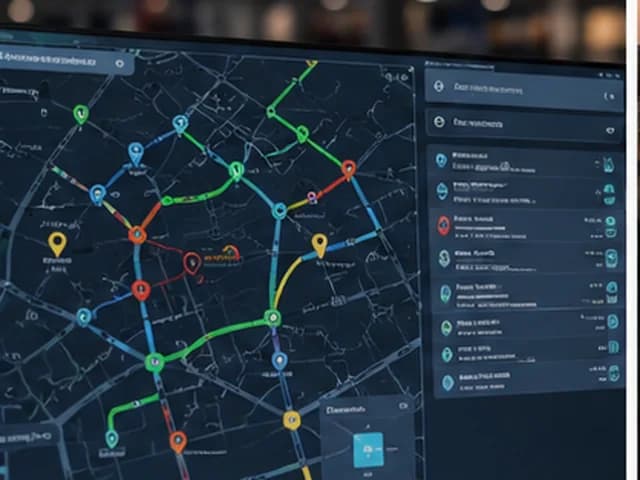
Dynamic Route Optimisation
Plan against live conditions and real limits, not against a map.
Route plans made by hand, or by a fixed tool, look sensible on paper and then miss what happens on the road. A market road is blocked between eleven and four. A customer takes goods only in the morning. A driver is close to his hours limit. So drivers go their own way. They are right to, and the plan was fiction.
Real planning handles the limits together: time windows, truck size and type, driver hours, and traffic by hour of the day. It also sets the loading order, so the last drop is not at the back of the truck. What comes out is a route drivers will follow, and that is the only test that counts.
Limits that get missed
- Loading order — ignore it and the driver ignores you.
- Truck bans by area and by hour of the day.
- Real receiving windows, often tighter than the stated ones.
- Driver hours and breaks, worked out rather than assumed.
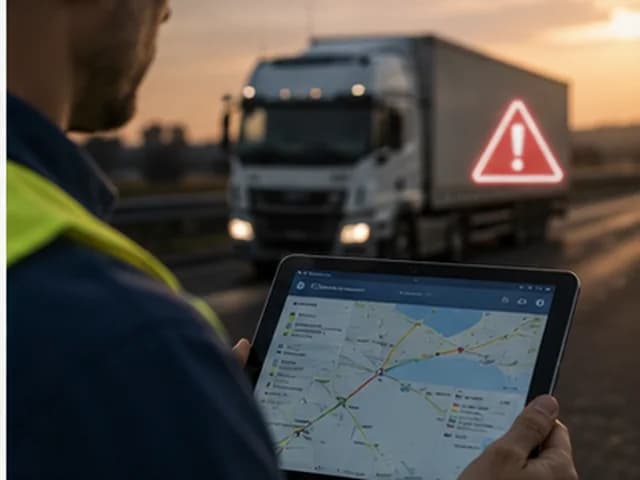
Delivery Exception Prediction
Know a shipment will fail while a cheap fix still exists.
Most firms handle exceptions after the fact: the shipment misses its window, the customer complains, and someone pays for a rush move. That one cost wipes out the margin on this load and several more.
A prediction moves the action earlier. The model watches the lane, the truck's position against plan, the weather, hub queues and how that consignee behaves. It flags loads drifting off an on-time path, while you can still re-order the run, rebook a slot or simply warn the customer.
Often the best fix is not a move at all. Tell the customer at nine in the morning that the load will come tomorrow. That is a far better day for them than finding out at five, and it costs you nothing.
Signals
- Position against planned progress, not just against the clock.
- Hub dwell time against the normal for that hub.
- How that lane and that carrier ran in this season last year.
- The consignee's own record — some fail drops again and again.
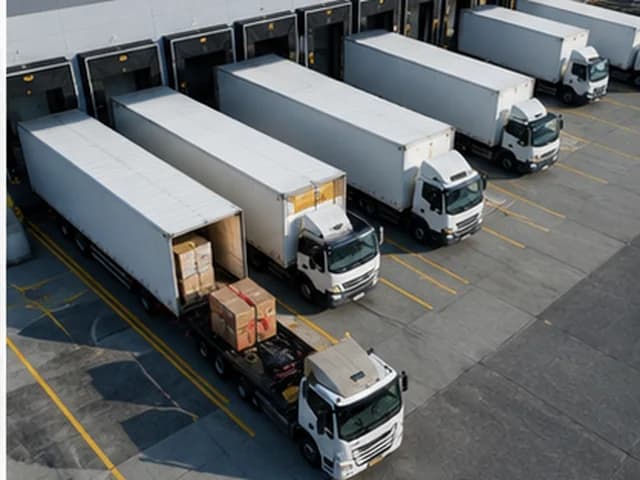
Load & Capacity Planning
Empty running is the biggest single cost in most fleets, and the least managed.
A truck coming back empty has burnt fuel, driver hours and wear for no money. Everyone knows this, and few fleets do much about it. Matching a return leg to spare freight means seeing both at the same time, and most firms have no such view.
A match has to solve several things at once. Which freight fits which truck type. Whether the timing sits inside driver hours, and whether the margin on a backhaul pays for the detour. Done well, this is often the fastest win a fleet can measure. The starting point is normally poor, and the gain lands straight in the fuel bill.
Measure
- Empty kilometres as a share of total run. Most fleets have never worked it out.
- Load factor by truck type and by lane.
- Money earned on each return leg.
- Detour cost, so a backhaul that loses money is not called a win.
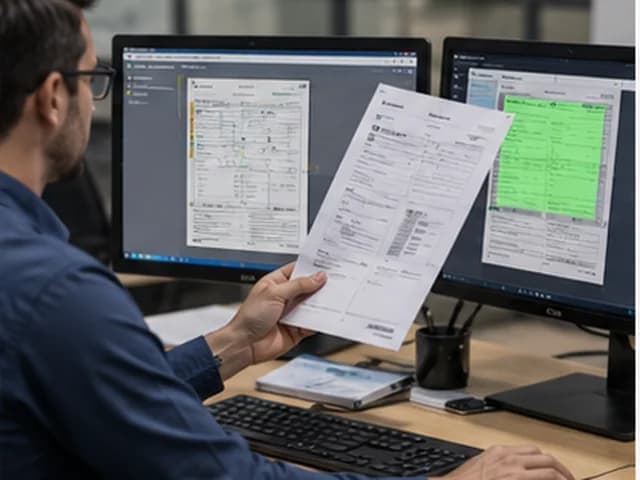
Freight Document Automation
PODs, e-way bills, invoices and LRs read on arrival, in whatever state they come in.
Logistics runs on paper that arrives photographed, crumpled, handwritten and half readable. Staff key it in again. The errors show up later — at billing, when a customer disputes a charge, or at audit, when an e-way bill does not match.
A model reads each paper as it lands, checks the figures against each other and matches them to the consignment record. It flags a mismatch the same day, not at month end. Indian freight paperwork is harder than the Western kind: more formats, more handwriting, more variety. A vendor who has not tested on your own papers is guessing.
Test it on real paper
- Photographed PODs at bad angles in poor light. That is the normal case.
- Handwritten notes, which often carry the point that matters.
- E-way bill checks against the consignment, not just reading.
- Many LR formats across carriers, none of them standard.
Real-Time ETA Prediction
An arrival time built from your lanes and your carriers, not a mapping API's guess.
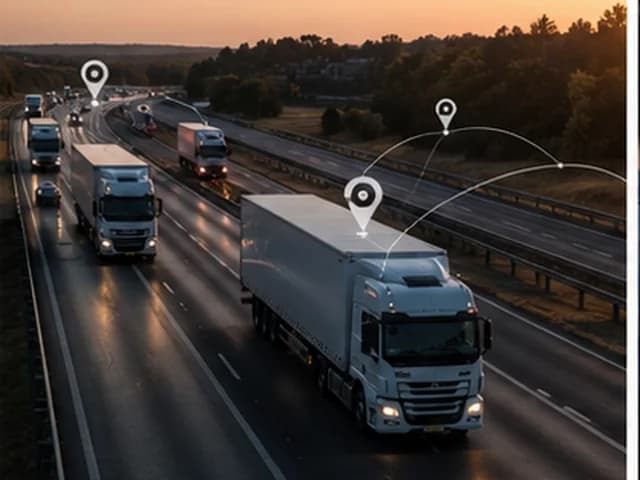
Most ETAs come from a mapping service that knows the road and nothing about your business. It does not know that this hub takes four hours to clear an inbound on a Monday. Nor that this carrier runs late all monsoon, or that this consignee's dock has a queue after two o'clock.
A model trained on your own past shipments learns those patterns. The ETA gets closer, but the bigger prize is the range around it. Knowing that an ETA is shaky is what triggers an early call to the customer. Those early calls are most of what customers mean by visibility.
Beats a mapping API because
- It learns hub dwell time, which no outside service can see.
- It knows how each carrier runs on your lanes, season by season.
- It gives a range, not just a time. The range is what drives action.
- It gets better with each shipment your network closes.
Warehouse Slotting Optimisation
Cut the walk on every pick by putting fast movers where the walk is shortest.
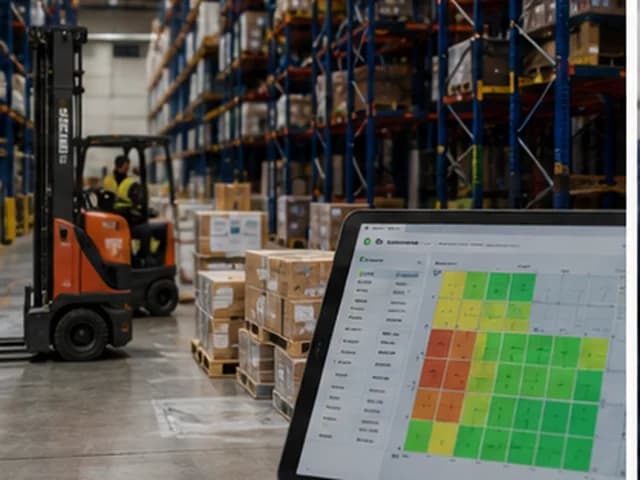
Slotting is set when a warehouse opens and rarely looked at again. Demand moves, seasons change and new SKUs arrive, but the layout stays as it was. So pickers walk further each month, and nobody has asked why.
Better slotting places SKUs by how often they are picked and by what they are picked with. Fast movers go near dispatch, and items picked together sit together. Walking is the main cost in hand picking, and this cuts it with no change to process or kit.
Practical
- Re-slotting costs labour. Model whether the saving pays for the move.
- Seasonal ranges need a fresh look, not a one-time job.
- What is picked together matters as much as what moves fastest.
- You need pick-line records, not just stock levels.

Fleet Predictive Maintenance
A breakdown on the road costs several times what the same repair costs in the yard.
Truck repair runs on two things: a fixed plan and a breakdown. The plan pulls in trucks that were fine. The breakdowns come where they hurt most — mid-route, load aboard, driver stranded, window gone.
Telematics already carries the signal: engine readings, fault codes, fuel use drifting up, hard braking. A model reads those against the repair record and says which trucks need work ahead of the next long run. The job then happens in the yard, on a day you chose.
Needs
- Telematics with engine readings, not just GPS position.
- A repair record per truck, including what was changed.
- Breakdown notes with a cause, however roughly written.
- Enough warning to match the parts lead time. Less, and nothing changes.

Carrier Performance Analytics
Rank carriers on delivered cost, which is rarely the rate they quoted.
Carriers are picked on rate, and the rate is the smallest part of what they cost you. A cheap carrier with more damage, poor POD returns and more failed first attempts costs more in total. That cost lands in claims, in the service desk and in return runs. None of it lands in the freight bill, which is the one place anyone compares.
Score them on true delivered cost instead: rate, plus damage, plus failed attempts, plus paper rework, plus the calls their loads create. The list usually reorders itself, and it gives you something solid for the next rate talk.
True cost includes
- Damage and claims, at settled value not claimed value.
- First-attempt delivery success, lane by lane.
- POD returns, and how long the papers take to come.
- Service calls raised per hundred shipments.
Where We Specialise
Agents for the Control Tower
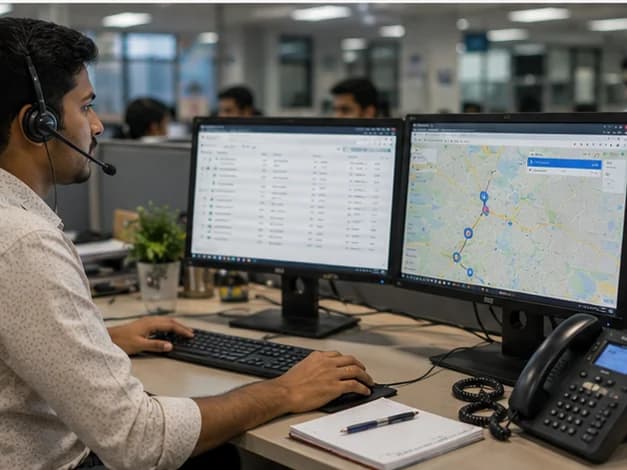
A control tower is people watching screens and making phone calls. The watching runs all day and is mostly dull. The calls are the same each time, and each one is urgent. Both suit an agent, and neither is how you want your best planners spending the day.
The four below watch, decide inside rules you set, and pass on what needs a person. A hard customer or a carrier tie-up still needs human judgement. The watching and the routine calls do not.
Exception Handling Agent
Each deviation caught, weighed and acted on before the customer sees it.
Exceptions come in faster than a control tower can work through them, and they are not equal. A shipment thirty minutes behind, on a lane with four hours of slack, needs nothing. One two hours behind, against a window that shuts at noon, needs action now. Telling one from the other is the whole job, and today it is done by whoever happens to be looking.
The agent watches each live shipment against its plan and works out which slips really threaten a promise. Then it acts inside your rules. It rebooks a slot, re-orders a route, warns the consignee, or hands the case to a person with the options worked out.
What reaches the control tower is a short list of real problems, each with a fix to approve. Not a wall of alerts to sort by hand.
Rules to set first
- How much slack each lane and each customer really has.
- Which fixes it may apply alone, and which need sign-off.
- A cost ceiling for any step taken without a person.
- Which customers must always hear it from a human.
Carrier Booking Agent
Freight matched, quoted and booked with the carriers that perform.
Booking is a set of small tasks repeated all day. Check which carriers serve the lane, ask for rates and compare them. Book, then confirm, then chase the confirmation that never came. Each takes a few minutes, and there are hundreds of them.
The agent matches each consignment to carriers by lane, truck type and service level, then gathers rates where none are contracted. It ranks by delivered cost, not by the rate quoted, and books inside your limits. It chases bookings nobody confirmed, and flags a carrier whose promised trucks never quite turn up.
Above your limit, a person approves. Below it, the booking just happens.
Ranks on
- Delivered cost from your own records, not the rate card.
- Trucks actually supplied against trucks promised.
- Lane by lane, since carriers vary hugely by route.
- Volume you have already committed to that carrier.
Customer Update Agent
The customer told before they ask. That is most of what visibility means.
Customers rarely want a tracking portal. They want to be told when something changes. Most complaints are not about the delay itself, but about hearing it too late to plan around.
The agent watches each shipment against the window you promised. When the ETA moves by enough, it sends an update: a new time, a reason, and a new promise. It answers status queries straight from live data. Anything that sounds unhappy goes to a person at once, and the agent does not try to handle it.
It also builds the daily summary that key accounts want and nobody has time to write.
Decisions to make
- How big a change is worth a message. Ten-minute moves are noise.
- Channel and language per customer, asked for rather than assumed.
- Anything unhappy goes to a person at once, never to the agent.
- Say what changed and what the new promise is. A bare sorry helps nobody.
Documentation Agent
PODs, e-way bills and invoices caught, matched and chased with no clerk on it.
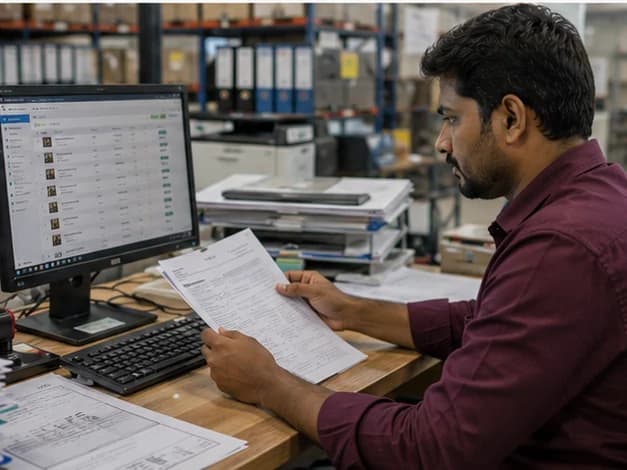
Paperwork is where billing quietly leaks. A POD that never came back means a bill you cannot raise, or a dispute you cannot defend. An e-way bill mismatch turns up at audit. Chasing carriers for papers is a full-time job nobody has been given.
The agent reads each paper as it arrives, matches it to the consignment and works out what is missing. Then it chases the carrier or driver who owes it. It checks e-way bills against the consignment and flags a mismatch while it can still be fixed.
Part of the saving is clerical hours. Most of it is the billing that no longer slips because a paper never arrived.
Where it pays
- Bills held up because a POD never came back.
- Disputes lost for want of a paper that existed but was never filed.
- E-way bill mismatches found at audit, not at receipt.
- Chasing that now depends on somebody remembering.
Rollout
How to Roll This Out Safely
Logistics punishes a bad rollout. A wrong route or a false alert costs real money the same day. This order of work keeps that risk small.
- 1
Run in shadow first
The system puts out routes, ETAs or alerts while your current process runs on unchanged. Compare the two daily. This is where you learn that a limit nobody mentioned is missing from the model.
- 2
Start with one lane or hub
Not the busiest, and not the easiest. Pick one with enough volume to matter and enough slack to take a mistake. Widen it once that lane has run a full week, bad day included.
- 3
Let drivers and planners argue
When a driver leaves the suggested route, record why. That is the most useful data you will collect, since it is nearly always a real limit the model did not know about.
- 4
Automate only once it is trusted
Suggestions first, with a person acting on them. Move to automatic only when those suggestions have been right long enough that the person is just signing off. That moment is the signal you are ready, not a date in a plan.
Being Straight About It
Worth doing if
- Fleets and 3PLs with telematics fitted and then ignored.
- Fleets that have never measured empty running as a share of total run.
- Networks with enough volume that one percent of cost is real money.
- Firms with a known, repeat cost from failed first attempts.
Probably not, if
- Very small fleets where one dispatcher holds the whole picture.
- Firms with no digital consignment record — that is the first project.
- Anyone who expects better routing to fix a truck shortage.
- Networks where you control neither routing nor carrier choice.
FAQ
Questions Operators Ask Us
No, and we would be wary of anyone who says it should. A TMS is a system of record: orders, bookings, billing. Replacing it is a big, disruptive job that needs its own case. What we build sits beside it, reads its data and writes back what it suggests. Most of the value here is in decisions a TMS does not make: which route, which carrier, which shipment is about to fail.
Because that behaviour is usually right, and it tells you the plan was wrong. Drivers deviate when a route ignores something real. A road blocked at certain hours. A loading order that puts the last drop at the back. A customer who takes nothing after noon. The first phase of a routing project is capturing why drivers deviate, then writing those limits into the model. A route that respects them gets followed, and one that does not will be ignored, whoever made it.
Better than a mapping API on your lanes, since it learns hub dwell and carrier habits that no outside service can see. We will not quote you a number before we look at your data. It depends on lane length, how many hubs a shipment passes and how variable your network is. What we will do is backtest against your past shipments, so you see the accuracy on your own history before you commit.
Usually, and that is exactly what we test on. Indian freight paperwork is harder than the Western kind: more formats, more handwriting, photographs taken at angles in poor light. A vendor who has not run a sample of your own papers before quoting is guessing. Send us fifty real PODs. We will show you the read rate on those, not on a clean sample.
Routing, ETA and exception models are cheap to run, since they work on a schedule against modest servers. Document reading scales with volume but stays low per paper. Agents that use an LLM carry a cost per action, and that cost tracks shipment count. A network moving five thousand consignments a month costs a good deal more than one moving five hundred. We model it against your real volumes rather than quoting a flat figure.
Yes, though each mode needs its own treatment. Road, rail and air differ in what data you get and in how uncertain they are. A model that averages across all three will be poor at all three. We would start with the mode that carries most of your volume and extend from there. Doing everything at once is how you do all of it badly.
That is a rules question, not a modelling one, and it pays to settle it early. Thresholds, channels, languages and escalation rules are set per customer. The common mistake is to assume one policy fits all. Then you find that your largest account expects a phone call, while everyone else is happy with a message.
For exception prediction and ETA: past shipment history with a timestamp at each scan point, ideally a year of it. For routing: consignment records with addresses, time windows and truck limits. For load matching: truck capacity and how full it runs today. For maintenance: telematics with engine readings, not only GPS. The assessment phase establishes what exists before we commit to anything.
Not well, and we would say so rather than take the project. GPS tells you where a truck is, not how the engine is behaving. Predictive maintenance needs engine readings and fault codes. If your telematics does not give them, upgrading part of the fleet is the honest first step. Cost that properly before you decide whether the project pays for itself.
Your data is yours, and you can export it at any time. We will never hold it hostage. You get the working system, the documentation and training, so your team can run it day to day. What else transfers at the end of a project — model files, source, licence terms — is set out in the contract before work starts. There are no surprises either way. Carrier performance data in particular is a bargaining card, and it should never sit somewhere you cannot control.
Carrier performance analytics, four to six weeks, since the data already sits in your records. Exception prediction and ETA, six to ten weeks. Routing takes two to three months, and most of that is capturing the limits drivers know and nobody has written down. Document reading, six to ten weeks, depending on how many formats you handle.
Gaps are normal and mostly workable. A missing scan at one hub does not spoil a shipment record. What does limit us is a large share of shipments with no scan in between at all. Then a model has nothing to watch between dispatch and delivery. We check the shape of that in the first fortnight, then tell you plainly whether prediction is viable.
We would encourage it, and carrier performance is usually the best first step. The data already sits in your records, and it needs no change on the ground to produce. The output feeds a decision you make anyway — which carrier gets the next lane. It also builds the data plumbing that the harder projects reuse.
Then we say so. Sometimes the visibility is not there. Sometimes the real problem is capacity or commercial, and no amount of planning touches it. You cannot optimise your way out of not having enough trucks. We would rather end a project in week two than build something that works on paper and changes nothing in the yard.
Recognise your plant in any of that?
Tell us which problem is costing you most and we will tell you honestly whether it is worth building, what data it needs, and roughly what it costs.
Book a Free ConsultationSee our Logistics & Supply Chain solutions